Reading time: 6 minutes
Choosing the walking surface of a mezzanine based only on the available dimensions can result in flooring that is not suitable for its actual use. Loads, operator traffic, wheeled handling and environmental conditions all directly affect the choice. For this reason, when evaluating flooring for a metal mezzanine, it is best to start from the operational requirements and only then identify the most suitable profile.
The word “iron” is often used in online searches as a generic term for metal structures and flooring. From a technical point of view, however, it is more accurate to refer to steel and to the other materials actually available for the different Abagrigliati products.
Depending on the profile, flooring can be manufactured from Sendzimir zinc-plated steel, raw steel or hot-dip galvanized steel. Some products are also available in Cor-Ten steel, stainless steel or aluminium alloy. Materials and finishes should therefore always be checked according to the selected profile and its operating conditions.
For a broader overview of applications in production environments, you can also read our article on Abagrigliati metal gratings for industrial flooring.
For technical advice, call +39 049 5797535 or use the contact form.
What requirements should a mezzanine floor meet?
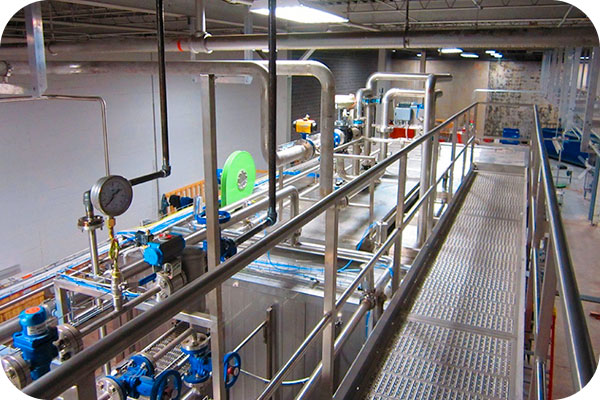
An industrial mezzanine can be used to extend a working area, create additional storage space, provide technical access or connect different areas of a facility. The flooring should therefore be selected according to its intended use and to the way the surface will be used on a daily basis.
A floor mainly intended for operator traffic has different requirements from one used for moving goods or equipment. The presence of manual trolleys, pallet trucks or small wheeled equipment compatible with the application can also affect the configuration to be selected.
The installation environment is another important factor. Water, humidity, exposure to weather conditions or the need to allow air and light to pass through the surface can lead to the selection of profiles with different characteristics.
To explore this aspect from the perspective of pedestrian surfaces, read our guide to metal walkway grating.
What loads should the flooring support?
The expected load is one of the first factors to consider when defining the floor of a metal mezzanine. People, goods, machinery and equipment generate different loads, which must be assessed together with the characteristics of the supporting structure.
The distance between supports and the configuration of the mezzanine also influence the choice. For this reason, a request based only on the overall dimensions of the surface is rarely enough to identify the correct product.
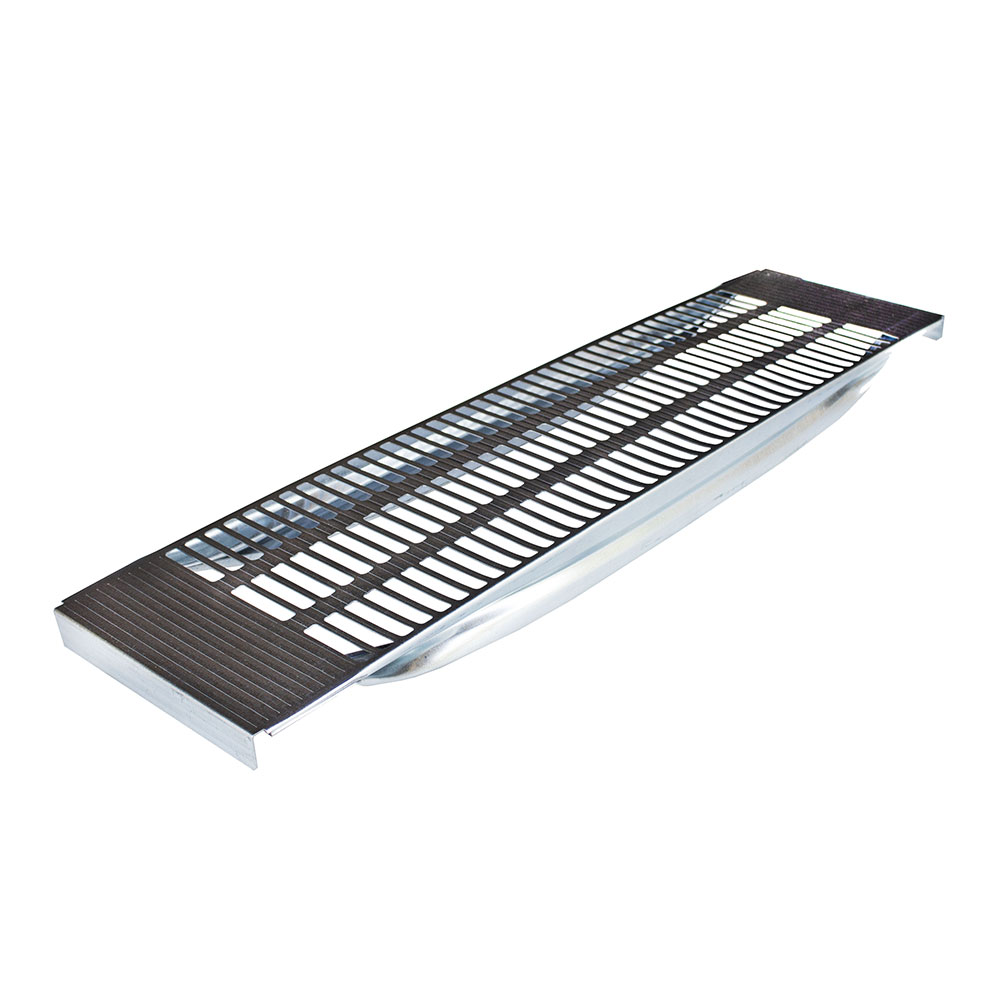
Where wheeled handling is involved, the intended type of use should also be specified. Abagrigliati trolley-access solutions are designed for applications involving medium-light loads and handling with manual trolleys, pallet trucks or small wheeled equipment, rather than heavy vehicle traffic.
If you are defining the flooring for a mezzanine, call Abagrigliati at +39 049 5797535 or send us your project information through the contact form.
Why consider a grating floor?
Abagrigliati profiled metal gratings make it possible to create modular surfaces by selecting the profile according to the specific requirements of the project. This allows the walking surface to be treated as an integral part of the mezzanine rather than simply as an element added to the supporting structure.
The range of Abagrigliati flooring profiles includes products with different surfaces and geometries. Depending on the product, perforated, closed and embossed configurations are available, together with solutions designed for trolley-access applications.
Widths, thicknesses, materials and surface characteristics also vary. The choice should therefore be made according to the individual profile, checking which properties are actually required for the intended use.
Open, closed or embossed surface: what changes?
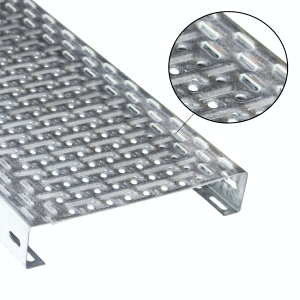
An open surface can be useful when the project requires air or light to pass through the floor, or when drainage through the surface is needed. In other situations, a closed configuration may be preferable, for example when the aim is to limit small objects or materials from falling through the flooring.
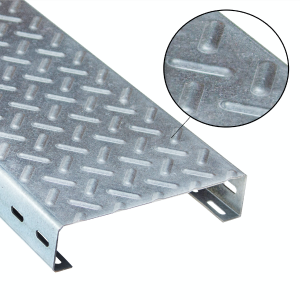
Embossed surfaces can be considered where a specific walking surface configuration is required. Open area percentage, geometry, embossing and grip characteristics should always be checked for the individual product.
One example is the RSA Profile, which can be used for mezzanines and pedestrian walkways and features a perforated surface. Profiles such as ZB and ZBC use a closed, embossed surface and can also be used for mezzanine flooring.
These differences show why the question should not simply be “is grating better than another type of surface?”. The key point is to understand which configuration of Abagrigliati metal gratings best meets the actual requirements of the project.
From “iron” to the materials actually used
Expressions such as “iron mezzanine”, “iron flooring” and “industrial iron mezzanine” are often used as generic ways of referring to metal structures. When moving from an initial search to the technical selection of a product, however, it is more useful to identify the actual material and finish required for the profile.
Depending on the product, the Abagrigliati range includes Sendzimir zinc-plated steel, raw steel and hot-dip galvanized steel. Some profiles are also available in stainless steel, Cor-Ten steel or aluminium alloy.
The choice depends on the characteristics of the environment and on the intended use. For this reason, the same material or finish should not be assumed to apply across the entire Abagrigliati range.
To explore this subject further, read Steel Grating for Industry: When to Choose It.
Common mistakes when choosing the surface
One of the most common mistakes is focusing on the material while overlooking the actual use of the mezzanine. Two surfaces with similar dimensions can have very different requirements if one is used only by operators while the other is intended for handling goods.
Another mistake is choosing a perforated profile simply because an open surface is required. The open area percentage, geometry and surface characteristics should be checked on the specific product and compared with the actual needs of the project.
The same applies to finishes and materials. Sendzimir zinc-plated steel, raw steel and hot-dip galvanized steel should not be considered interchangeable options without taking the installation environment into account. Exposure, environmental conditions and intended use all form part of the technical assessment.
Finally, the flooring should always be considered in relation to the underlying structure. Dimensions, supports, spans and fixing methods can all influence the solution to be evaluated.
To discover other contexts in which Abagrigliati metal gratings are used, you can also read our article on the main industrial applications.
How to turn your requirements into a technical brief
A well-prepared request makes it easier to move from a general requirement to the assessment of a specific product. Before contacting Abagrigliati, it can therefore be useful to collect some essential information:
- overall dimensions of the mezzanine;
- dimensions and characteristics of the supporting structure;
- intended use of the floor;
- expected loads;
- pedestrian traffic or wheeled handling;
- indoor or outdoor installation;
- possible presence of water or humidity;
- preference or requirement for an open, closed or embossed surface;
- required quantity.
This information helps identify which product families should be considered and what additional technical details may be required. The discussion can then focus on the profile, material, finish and accessories compatible with the structure.
The Abagrigliati range also includes accessories for flooring systems, including anchoring systems, joints and components designed to complete the surface.
Are you designing the flooring for an industrial mezzanine? Call +39 049 5797535 or fill in the contact form, providing the dimensions, intended use and characteristics of the structure. Abagrigliati can help you identify the solution to evaluate for your project.
FAQ about metal mezzanine flooring
How do you choose flooring for a metal mezzanine?
The choice should start from the intended use, loads, supporting structure, dimensions, installation environment and the way the floor will be used. Although the word “iron” is sometimes used generically when referring to metal structures, the actual material and finish of the specific profile should always be checked.
Abagrigliati offers different profiled solutions for flooring and mezzanines, which should be assessed according to the characteristics of the project.
When is grating the right solution?
Profiled grating can be considered when a project requires modular metal flooring with characteristics selected according to its intended use. The Abagrigliati range includes perforated, closed and embossed profiles, as well as solutions for specific trolley-access applications.
There is no single profile suitable for every mezzanine: geometry, material, surface and configuration should be checked against the actual operating conditions.
What information is needed when requesting technical assistance?
It is useful to provide the mezzanine dimensions, supporting structure, intended use, expected loads, type of traffic and installation environment. Any specific requirements concerning the surface, drainage or grip can also be included in the initial request.
Technical drawings, photographs and measurements of the existing structure can also help provide a clearer overview of the project. For technical advice, call +39 049 5797535 or use the contact form.