Reading time: 7 minutes
As a warehouse grows, storage space can become insufficient. Shelves that are not suited to the goods being stored, difficulties in picking materials, and structures that no longer meet operational needs can complicate everyday work. This is why, when choosing industrial metal shelving, it is important to consider not only the dimensions of the structure but also the characteristics of its individual components.
Table of Contents
Abagrigliati specialises in manufacturing metal profiles and racking panels for shelving and warehouse storage systems. The company offers a range of steel solutions, including custom-made components, to create supporting surfaces suited to specific project requirements. The selection process starts with the type of goods to be stored, the expected loads, and how the warehouse will be used.
When industrial metal shelving is really needed
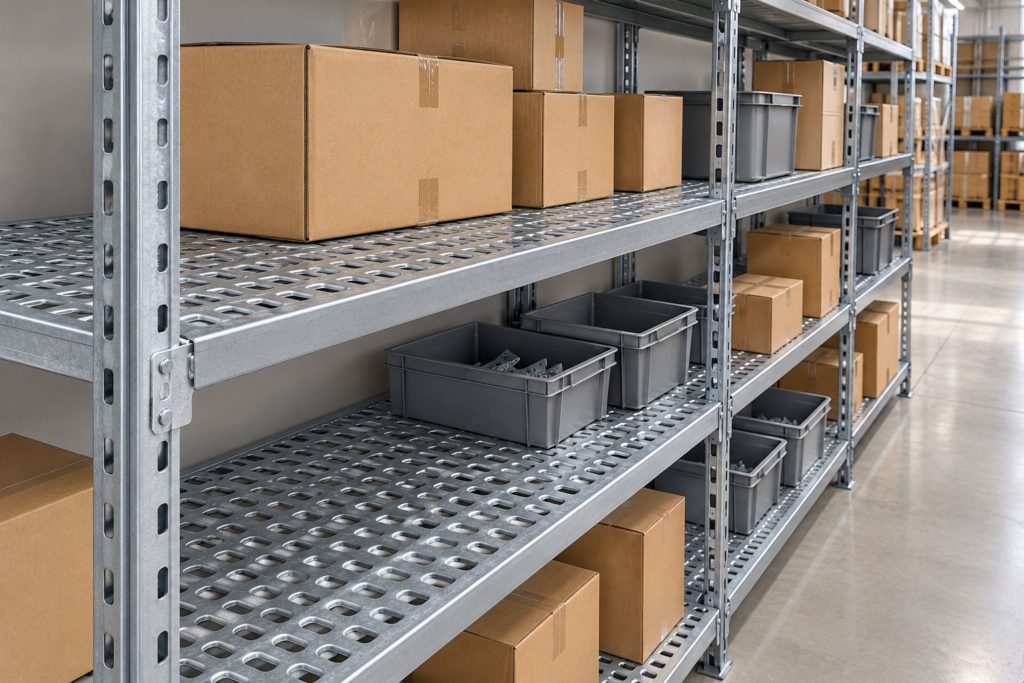
Industrial metal shelving makes it possible to organise goods by taking advantage of the available vertical space and distributing materials across multiple levels. It is used in logistics warehouses, storage areas within manufacturing companies, and facilities for spare parts, semi-finished goods, and finished products.
The need to install new shelving may arise from an increase in stored goods, changes in warehouse organisation, or the need to replace components that no longer meet operational requirements.
In all these situations, it is important to assess the characteristics of the shelves. A surface suitable for small containers may not be equally functional for bulky materials or goods with loads concentrated at specific points.
Abagrigliati manufactures racking panels for warehouse metal shelving, with a product range that includes H29 profiles and metal panels available in different heights, sections, and configurations.
These components make it possible to design the supporting surface according to the load-bearing structure and the goods being stored. Different solutions can therefore be considered depending on shelf depth, load distribution, and the required surface characteristics.
When choosing industrial metal shelving, it is also essential to know the expected load capacity. The total weight of the materials, the distance between supports, and how the load is distributed must all be considered during the design process. Load capacity must always be assessed for the complete system, not just the individual panel.
To learn more about other applications of Abagrigliati products in industrial and logistics environments, read our article on Abagrigliati metal gratings and their industrial applications.
Are you planning to build or modify an industrial shelving system? Contact Abagrigliati on +39 049 5797535 or fill in the contact form to assess the most suitable components for your project.
Where component customisation makes a difference
Not all shelving systems have the same dimensions, and not all warehouses require shelves with identical characteristics.
Customisation becomes particularly useful when new components must be integrated into existing structures or when storage levels need to be manufactured to specific dimensions.
Abagrigliati offers different families of profiles and racking panels, distinguished by their height, thickness, surface configuration, and manufacturing options.
H29 PL, PB and PFR profiles for shelving
H29 profiles are among the Abagrigliati solutions that can be used to manufacture metal shelves. The range includes three models:
- Profile PL: a Sendzimir galvanised steel profile suitable for manufacturing shelving panels and as a base for floor coverings.
- Profile PB: a profile characterised by high structural rigidity, suitable for use as shelving panels.
- Profile PFR: another solution from the H29 family, characterised by high structural rigidity and available in different materials and finishes.
All three profiles are designed for use as shelving panels, although they can also be employed in other technical applications.
The choice between PL, PB and PFR depends on the characteristics required of the supporting surface. Abagrigliati can supply profiles in customised lengths, within the dimensional limits specified for each model.
H25, H30 and H40 racking panels: choosing according to the project
For the construction of shelves, Abagrigliati also offers metal racking panels made from Sendzimir galvanised steel, available in different configurations.
H25 racking panels are suitable for lightweight and modular shelving systems. The range includes plane head and pressed head versions, with different options in terms of width and thickness.
H30 and H40 racking panels offer additional configuration options for industrial shelving systems with different load requirements. The available heights and sections make it possible to assess each component according to the structure and the supports provided.
Panel height alone does not determine load capacity. Thickness, the span between supports, and loading conditions must also be considered, with reference to the product’s technical specifications.
Perforated or closed ribbed racking panels?
Another factor to consider is the surface configuration.
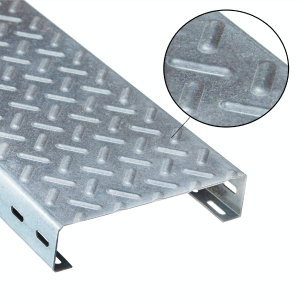
Closed ribbed panels provide a continuous supporting surface, with reinforcing ribs that contribute to the component’s rigidity. They may be a suitable choice when storing materials that require a surface without openings.
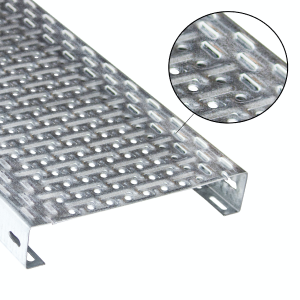
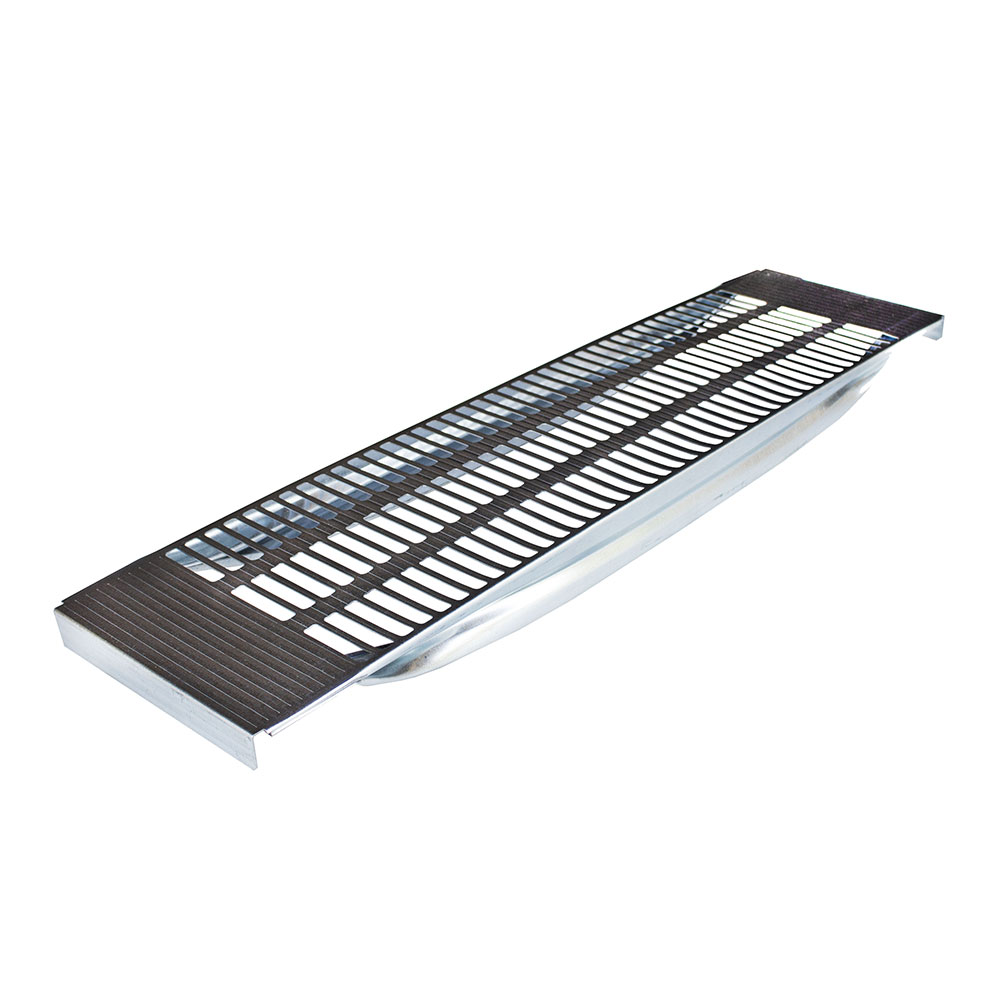
Abagrigliati perforated racking panels include versions with a 50% open area and 8×38 mm slots. This configuration allows air or liquids to pass through the shelf and can be useful when this feature is required by the application.
The choice must also take into account the dimensions of the goods: very small items or components without suitable containers may not be compatible with a perforated surface.
To compare the available options, you can explore Abagrigliati’s racking components and examine the characteristics of the individual products.
Customisation is also important in other industrial applications. Read our guide to steel grating for industry to learn more about material selection, load assessment, and the differences between standard and custom-made solutions.
Are you looking for metal racking panels with specific dimensions? Call Abagrigliati on +39 049 5797535 or send an enquiry using the contact form. By specifying the dimensions and intended use, you can receive guidance on the available customisation options.
How to improve warehouse organisation and accessibility
The choice of metal shelving for warehouses affects how materials are organised and how easily operators can access them.
When items are stored without considering their dimensions, weight, and picking frequency, even a large warehouse can become inefficient.
To improve organisation, it is useful to start by looking at everyday operations. Frequently used materials should be placed in easily accessible positions, while respecting safety requirements and the characteristics of the shelving system.
Bulkier products require shelves with suitable dimensions, while heavier goods must be positioned according to the permitted load capacities and the stability of the structure.
Configuring shelving panels correctly
Abagrigliati contributes to warehouse organisation by manufacturing profiles and racking panels that can be used at different levels of a shelving system.
The availability of closed ribbed and perforated versions, together with different sections, makes it possible to adapt the supporting surfaces to the characteristics of the materials being stored.
For example, a warehouse storing industrial spare parts may require shelves of different depths to accommodate containers of varying sizes. In an area intended for heavier components, on the other hand, the technical characteristics of the racking panel and its compatibility with the supporting structure become decisive factors.
The arrangement of the different levels must also be planned to allow easy access to goods. The choice of metal components is therefore part of a broader assessment that includes dimensions, picking methods, and the organisation of storage locations.
The importance of components in industrial logistics
Abagrigliati has developed its expertise in manufacturing components for industrial shelving systems, working with companies operating in the logistics and warehousing sectors.
Its knowledge of materials and manufacturing processes enables the company to handle requests involving specific dimensions or configurations that differ from more conventional solutions.
Abagrigliati has also presented its shelving solutions at LogiMAT, the international trade fair dedicated to intralogistics and materials flow management.
Read more: discover the shelving components and storage solutions presented by Abagrigliati at LogiMAT 2024.
Would you like to improve your warehouse shelving configuration? Contact Abagrigliati on +39 049 5797535 or fill in the contact form to discuss the available components with the company.
What information to collect before making an enquiry
To identify the most suitable components for industrial metal shelving, it is useful to provide Abagrigliati with some technical information from the very first enquiry.
In particular, it is important to know:
- Shelf dimensions: length, depth, and measurements of the available space.
- Expected loads: maximum weight of the goods, load distribution, and distance between supports.
- Type of structure: characteristics of the existing shelving or the system being designed.
- Required surface: preference for closed ribbed panels, perforated panels, or other metal profiles.
- Operating conditions: installation environment, handling frequency, and any specific operational requirements.
- Required quantities: number of components needed and any customised dimensions.
For existing shelving systems, it may be useful to attach photographs or technical drawings showing the support system and how the panels are secured.
If the project is still being defined, it is advisable to provide at least the intended dimensions and the type of materials to be stored. This information makes it possible to begin assessing the available solutions and identify any additional technical details required.
Abagrigliati manufactures metal profiles and racking panels, including custom-made solutions, and provides support in selecting components according to the project’s requirements.
Request information from Abagrigliati
Are you designing new shelving or do you need to replace the panels in an existing structure? Abagrigliati can help you assess the characteristics of metal components, available dimensions, and customisation options.
Call +39 049 5797535 or fill in the contact form to submit your enquiry and receive technical support.
Frequently asked questions about industrial metal shelving
How do you choose between different industrial metal shelving systems?
When choosing a shelving system, it is important to consider the type of goods, warehouse dimensions, expected loads, and picking methods. For the shelves themselves, Abagrigliati offers H29 profiles and H25, H30, H40 and MF metal racking panels in different configurations. The choice must be assessed in relation to the load-bearing structure.
When are customised components needed?
Customised components are useful when standard dimensions are not compatible with the shelving system or when the project requires specific sizes, thicknesses, or configurations. Abagrigliati can assess the production of custom-made profiles and racking panels according to the required technical specifications.
How can you tell whether Abagrigliati is the right choice for your project?
Abagrigliati specialises in manufacturing metal profiles and racking panels for industrial shelving and warehouse storage systems. The company is therefore a suitable partner for those looking for components to manufacture or complete shelving levels. To determine which solution is appropriate, it is advisable to provide details about dimensions, loads, quantities, and the characteristics of the structure.