Reading time: 6 minutes
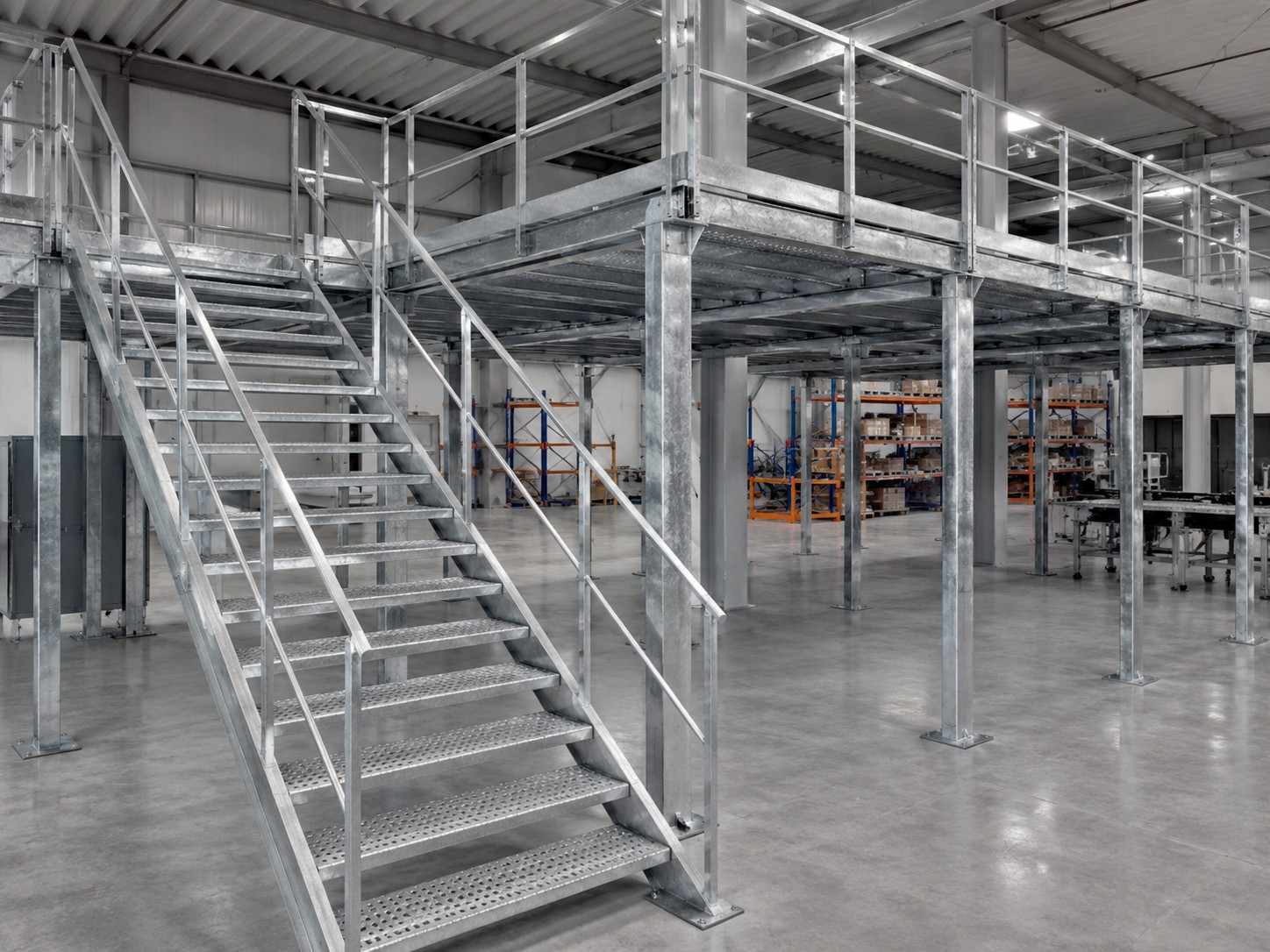
An industrial staircase is never just a connection between two levels. It is a continuous passage point, often exposed to dirt, moisture, loads, impacts and operational traffic. When the stair tread is not suitable for its context, the risk does not only concern user comfort: it can affect safety, durability and the overall management of the plant.
For this reason, choosing profiled metal grating stair treads must start from a concrete technical assessment, not from a single measurement taken in isolation.
Abagrigliati develops solutions for industrial stairs, technical plants, walkways and escape routes, with steps designed to provide grip, resistance and long-term operational continuity. In this article, we explain how to make the right choice, which features to assess and when it is useful to involve the supplier before finalising the project.
Table of contents
- How to choose profiled metal grating stair treads that really fit your plant
- P50, P60 and welded head GF steps: when to assess them
- Which features matter in industrial environments
- Accessories, fixings and continuity with metal flooring
- Where they make the difference in terms of safety
- When to involve the supplier in the project definition
- FAQ about profiled metal grating stair treads
- The right choice starts from the context
How to choose profiled metal grating stair treads that really fit your plant
Choosing profiled metal grating steps should not start only from the width of the staircase or the length of the tread. In an industrial environment, several variables come into play: frequency of use, indoor or outdoor installation, presence of water or residues, drainage requirements, exposure to weather conditions, type of supporting structure and required safety level.
This is why Abagrigliati offers profiled metal grating steps designed for indoor stairs, outdoor stairs, safety stairs and plant engineering applications. The range includes different solutions to meet requirements related to frequent use, load capacity, structural stability and long-term resistance.
Explore the product category: profiled metal grating stair treads.
P50, P60 and welded head GF steps: when to assess them
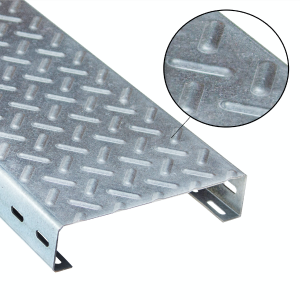
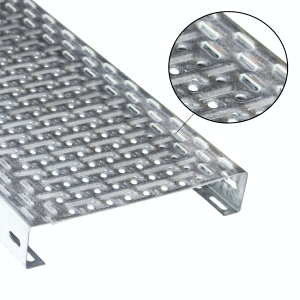
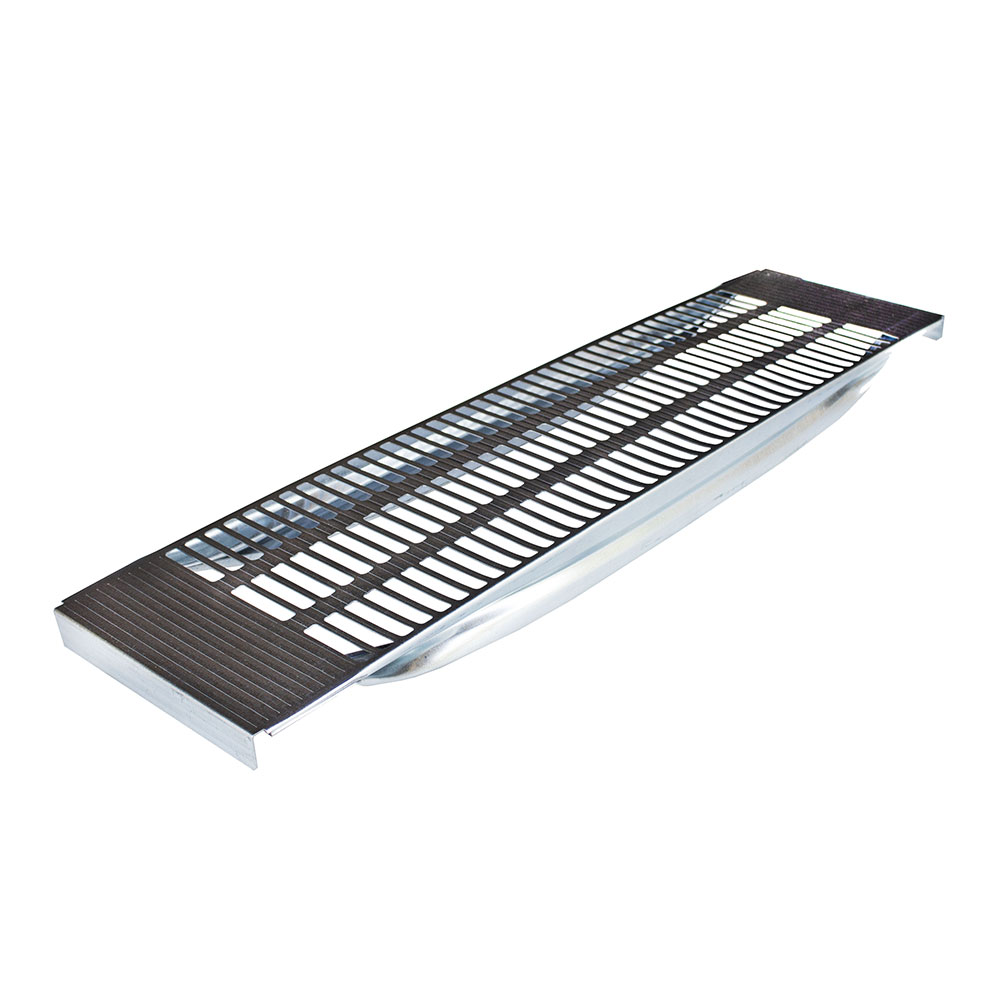
When choosing profiled metal grating stair treads for industrial stairs, it is important to distinguish between the functional characteristics of the step and its mounting configuration. In the case of P50 embossed perforated steps and P60 embossed closed steps, the main difference concerns the pitch itself, meaning a dimensional configuration to be assessed according to the structure on which the step must be installed.
In some configurations, it may also be useful to consider welded head GF steps. In this case, the specification “welded head” is important because it identifies a precise type of GF step: the side ends welded to the step make integration with certain staircase structures easier and help avoid misunderstandings during the request, quotation and supply phases.
Do you already have an industrial staircase project or need to replace existing steps?
You can contact Abagrigliati at +39 049 5797535 or send a request through the contact form. An initial technical discussion helps identify the most suitable solution before proceeding with the supply.
Which features matter in industrial environments
In an industrial environment, a stair tread must perform well over time. It is not enough for it to be resistant at the time of installation: it must maintain reliable performance even when the environment becomes more complex, for example in the presence of dust, moisture, weather exposure or repeated traffic.
The main features to assess include:
- anti-slip surface, useful for improving grip when going up and down the stairs;
- embossing, designed to improve adhesion and stiffen the profile;
- anti-panic or draining perforation, important when run-off and greater operational safety are required;
- material and finish, to be selected according to the installation environment;
- section and pitch, to be defined according to the structure and intended use;
- fixing accessories and step-front elements, essential to complete the staircase correctly.
Abagrigliati works with different materials and finishes, including raw steel, Sendzimir galvanized steel, hot-dip galvanized steel, stainless steel, corten steel and aluminium, depending on the model and required configuration. This variety makes it possible to adapt the solution to the real context: indoor staircase, production plant, outdoor environment, technical area or maintenance access route.
When discussing anti-slip steps, it is important not to stop at a generic definition. Surface geometry, embossing, perforation and profile type directly affect the user experience and the level of safety perceived by operators.
For more technical applications, Abagrigliati assesses the step as part of a wider system, together with the staircase, walkway or metal structure into which it will be integrated.
Accessories, fixings and continuity with metal flooring
During the design phase, it is also important to consider step accessories, because fixing, support and completion elements can affect the correct installation and final functionality of the staircase.
When the staircase connects to walkways, technical platforms or raised working areas, the choice of steps must be considered together with the metal flooring system of the plant. This is why it can be useful to explore the topic of metal walkway grating, especially in contexts where walking continuity, drainage and safety must work together.
Explore the related solutions: step accessories and metal walkway grating.
Where they make the difference in terms of safety
Industrial stairs are critical points because they combine movement, height differences and operational traffic. A poorly designed step, or one selected without considering the actual context, can become a weak point in the plant. On the contrary, a correctly selected step helps make the route more stable, readable and safe.
Abagrigliati profiled metal grating stair treads can make the difference especially in three situations.
Environments with water, dirt or weather exposure
When the staircase is installed outdoors or in areas exposed to moisture, drainage becomes an important factor. Perforated surfaces help water, dirt and residues run off, reducing the risk of standing water and improving the continuous usability of the staircase.
The same principle applies to wider walking surfaces: in production departments, walkways and technical areas, metal gratings for industrial flooring help create practical, draining surfaces suitable for intensive-use environments.
Explore the related topic: metal gratings for industrial flooring.
Production plants and technical areas
In industrial plants, traffic may be frequent, repeated and linked to maintenance activities. In these cases, steel steps or materials consistent with the environment are required, capable of providing stability and resistance to daily stress.
When the project involves vertical access, fixed ladders or technical routes with requirements different from traditional steps, metal rungs can also be assessed to complete industrial access and climbing systems.
For more demanding applications, the choice of material becomes essential. If the project requires resistance, stability and consistent performance, it may be useful to explore the topic of steel grating for industry, because material, surface and intended use directly affect the quality of the final solution.
Explore the related resources: metal rungs and steel grating for industry.
Safety stairs and orientation routes
In safety routes, the step must not only be resistant, but also clearly visible. For this reason, when the project requires it, high-visibility step-front accessories can be integrated, helping operators orient themselves and making the route easier to read.
Safety is therefore not a matter of a single detail, but of the combination of surface, material, profile, accessories and correct integration into the structure. This is where Abagrigliati’s experience in solutions for industry and plants becomes a concrete value.
Do you need a solution for industrial stairs, walkways or technical plants?
Call Abagrigliati at +39 049 5797535 or fill in the contact form: the team can help you assess the most suitable step, material, accessories and configuration for your installation environment.
When to involve the supplier in the project definition
The supplier should be involved before the project is fully finalised, especially when the staircase must be integrated into an existing plant or when technical constraints are present. Waiting until the final stage can lead to less efficient choices, more complex adaptations or solutions that are not perfectly aligned with real use.
Involving Abagrigliati in advance makes it possible to assess:
- the most suitable type of step;
- the choice between P50 embossed perforated steps and P60 embossed closed steps;
- possible use of welded head GF steps;
- available dimensions and sections;
- material and finish;
- possible need for step accessories;
- installation environment conditions;
- compatibility with existing stairs, walkways or structures.
This approach is particularly useful for industry and plant engineering applications, where profiles and metal steps must meet precise requirements in terms of resistance, safety and functionality.
Explore the applications: industry and plants.
When the project includes not only stairs, but also walkways, platforms, protection systems or technical surfaces, it is important to consider the entire system. For a broader overview of possible uses, you can read the guide dedicated to Abagrigliati metal gratings, useful for understanding materials, applications and selection criteria.
Abagrigliati does not simply supply a catalogue product: it supports the choice with a technical assessment consistent with the application. This is an important difference, especially when the steps must be integrated into wider access, maintenance or internal handling systems.
Explore the general guide: Abagrigliati metal gratings.
FAQ about profiled metal grating stair treads
How can I request the right step for my plant?
To request the right step, it is advisable to provide information about the intended use, measurements, indoor or outdoor environment, type of structure, drainage needs, traffic level and preferred materials. The Abagrigliati team can help assess the pitch, model, finish and accessories that best fit the project.
What is the difference between P50 and P60 steps?
The difference between P50 steps and P60 steps concerns the pitch, meaning a dimensional configuration to be assessed according to the structure on which the step must be installed. It should not be interpreted as a difference in strength, performance or anti-slip properties: the choice mainly depends on mounting requirements, available dimensions and compatibility with the staircase.
The right choice starts from the context
Profiled metal grating stair treads are not elements to be selected only by size or availability. In an industrial staircase, safety, grip, drainage, resistance, integration into the structure and consistency with the installation environment all matter.
Are you designing or upgrading an industrial staircase?
Contact Abagrigliati at +39 049 5797535 or fill in the contact form to request support in choosing the most suitable steps for your plant.